
Beyond the Buzz: What Makes a Functional Beverage Actually Work
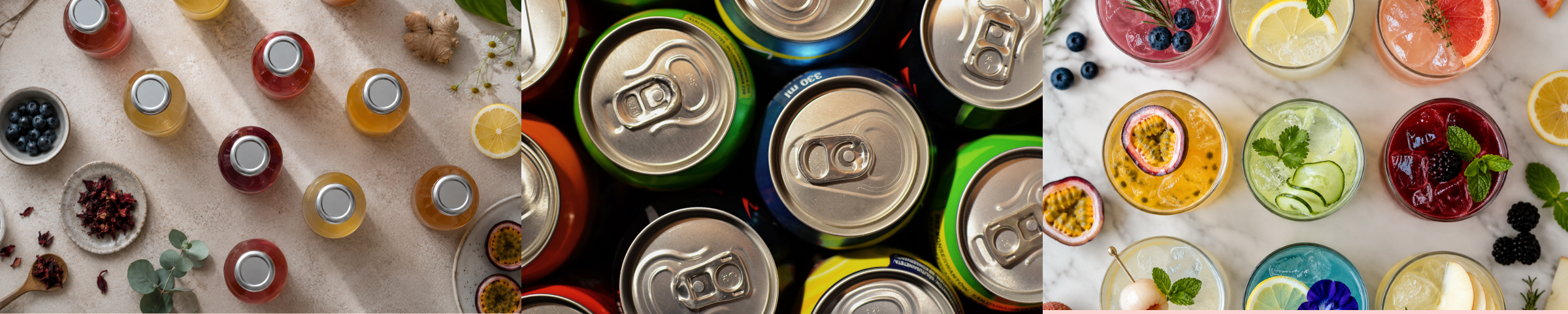
Somewhere between the kombucha craze, the adaptogen explosion, and the sober-curious movement picking up real cultural momentum, the functional beverage category quietly became one of the most competitive — and confusing — spaces in food and drink. Every brand promises calm. Every brand promises focus. Every brand promises gut health, energy without the crash, or sleep you'll actually remember. Most of them can't deliver on all of it. Some of them can't deliver on any of it.
So what separates a functional beverage that earns repeat purchase from one that ends up as a novelty in the back of the fridge? That's the question worth asking — and answering — if you're building, buying, or advising on products in this category.
The Market Reality: How Big, How Fast, and Who's Driving It
The numbers are hard to ignore. The global functional beverage market is valued at approximately $157.9 billion in 2025, projected to reach $220.9 billion by 2030 at a compound annual growth rate of roughly 6.95%, according to Mordor Intelligence. A broader projection from Future Market Insights anticipates the category surpassing $308 billion by 2035.
Within that, some of the fastest-growing segments tell their own story about where consumer priorities are heading. Sports and energy drinks currently command about 28.85% of market share, but sports drinks are growing fastest at an 8.61% CAGR through 2031, driven not just by athletes but by mainstream wellness consumers who have adopted hydration as a daily ritual. Alternative sodas containing fiber and prebiotics hold roughly 6% of the total beverage market share but are driving 27% of category growth — a textbook example of what NIQ's beverage analysts describe as 'overcontribution relative to size,' and a clear signal of where innovation attention should focus.
The non-alcoholic alternatives segment is approaching $600 million and growing around 32%, according to KeHE market data — fueled by the sober-curious movement graduating from a Dry January experiment into a year-round lifestyle choice. A January 2025 study from Heineken found that 81% of consumers now believe it's completely fine to decline alcohol without explanation, and 86% feel comfortable choosing low- or no-alcohol drinks at social gatherings. The stigma that once made these products a niche is evaporating.
What 'Functional' Actually Means in 2026
Here's the honest complication: 'functional' has become one of the most elastically applied — and consumer-abused — words in the food and beverage lexicon. Technically, everything you eat or drink is functional in some sense. In practice, the category has fragmented into a handful of meaningful benefit territories, each with its own consumer base, ingredient logic, and performance expectations.
Gut Health
Gut health remains the largest functional beverage segment, historically accounting for about 26% of functional beverage launches, according to Innova Market Insights. Probiotic-based beverages are projected to be the fastest-growing subsegment through 2035, driven by rising consumer awareness of the microbiome's role in immunity, mood, and metabolic health. Kombucha and kefir led the first wave; the second wave is characterized by precision probiotic strains, prebiotic fiber additions, and postbiotic ingredients that bridge the gap between science and shelf communication.
Stress Relief and Calm
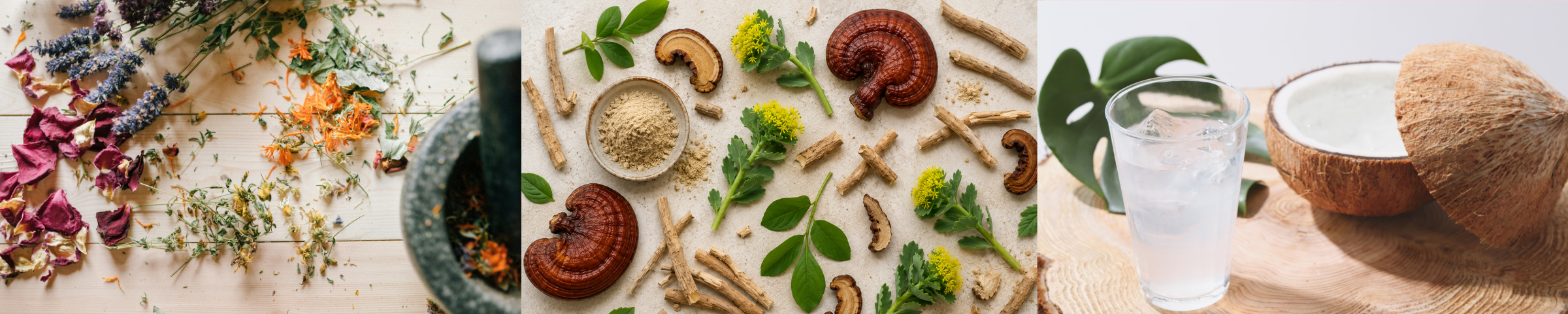
Adaptogens — herbs and botanicals like ashwagandha, rhodiola, and reishi mushroom — are the foundation of the stress-relief beverage tier. Brands like Kin Euphorics, De Soi, TRIP, and Hiyo have built their identities around helping consumers manage anxiety and stress without alcohol or pharmaceutical intervention. The ingredient logic is real: ashwagandha has a legitimate evidence base for cortisol reduction; L-theanine, commonly derived from green tea, is well-documented for promoting calm alertness without sedation. The challenge for brands is communicating these benefits without overpromising — a problem the category has historically struggled with.
Cognitive Performance and Focus
Nootropics — ingredients designed to support cognitive function, focus, and mental clarity — represent one of the newer and faster-growing functional territories in beverages. L-theanine and caffeine together are perhaps the most studied and credible pairing for focus without jitteriness. Lion's mane mushroom is gaining ground as a mainstream ingredient following years of niche adoption, with meaningful emerging evidence for neurological support. IFT's Outlook 2026 flavor report flags 'neuroflavor' — beverage experiences designed to modulate mood, cognition, and emotional states — as a defining trend of 2026. This isn't just trend-speak; it reflects real consumer demand for what they describe as 'on-demand' mental states.
Hydration and Recovery
Electrolyte-enhanced waters, coconut water derivatives, and recovery-focused functional beverages represent some of the most commercially successful entries into the category — in part because their benefit claims are well-understood and the consumer experience is immediate and perceptible. Brands like Liquid I.V., LMNT, and the expanding lineup of cactus waters and functional sparkling waters have democratized functional hydration beyond the gym bag. The Whole Foods Trend Council flagged electrolyte-enhanced beverages as a top trend for 2025, noting new product formats including pouches and mini coconuts targeting a broader age demographic.
The Credibility Problem — and How to Solve It
Consumer enthusiasm for functional beverages is high. Consumer skepticism is also high. In a category where every product claims to boost immunity, reduce stress, or sharpen focus, the real differentiator isn't the benefit claim — it's the credibility behind it. According to Mordor Intelligence, one of the biggest growth barriers in the functional beverage market is consumer skepticism about efficacy claims. That skepticism is rational. Brands have been making big claims on small ingredient quantities for years, and consumers have noticed.
The brands gaining durable market share in this category share a few things in common. First, they're transparent about their formulations — specific strains, specific doses, specific sourcing. Second, they're honest about what the product does and doesn't do. Hiyo, one of the more thoughtful entrants in the sober-social space, positions itself not as an alcohol replacement but as an answer to why people drink alcohol: the relaxation, the social ease, the ritual. That framing is honest and resonant in a way that 'alcohol-free wine' rarely manages.
Third, they treat taste as non-negotiable. The historical functional beverage failure mode is a product that technically delivers its benefit but tastes like a wellness obligation. The brands winning now understand that taste is the gateway to everything else. If the consumer doesn't finish the bottle, the functional ingredient never had a chance to work.
The Sober-Curious Opportunity: More Than Mocktails
The sober-curious movement deserves its own conversation because it's doing something interesting: it's creating premium occasion beverages that aren't defined by the absence of alcohol, but by the presence of something better. Flavorman's 2026 Beverage Trends report predicts continued growth in functional mocktails with adaptogens, hemp-derived THC beverages, and innovative flavor profiles that replicate the complexity of traditional spirits without the hangover.
What this means for operators and CPG developers is that the occasion — the dinner party, the bar cart, the after-work wind-down — is as important as the ingredient. Consumers aren't looking for a lesser version of a cocktail. They're looking for a ritual that feels equally intentional, premium, and social. Products and menu items that understand this framing tend to perform significantly better than those positioned purely as 'the healthy choice.'
The Formulation Challenges Worth Knowing
Building a functional beverage that actually works — sensorially, clinically, and commercially — is harder than building a conventional one. The challenges are worth understanding, especially for operators and manufacturers evaluating co-packer relationships or new product launches.
Specialty functional ingredients like ashwagandha, lion's mane, specific probiotic strains, and collagen peptides carry significant cost premiums and supply chain volatility. A poor harvest or fermentation disruption can create pricing instability that threatens margins or forces reformulation mid-product-lifecycle. The FDA's updated definition of 'healthy,' which took effect in February 2025, imposes stricter criteria for health claims, requiring specific nutrient profiles and limitations on added sugars, saturated fats, and sodium. Functional ingredient interactions with taste are a non-trivial formulation challenge: adaptogens can be earthy and bitter; certain probiotic strains affect carbonation and shelf stability; functional mushrooms carry umami and earthiness that can be difficult to mask in sweet beverage formats.
None of these challenges are dealbreakers. They are reasons to work with formulators who have solved them before, rather than discovering them in your first production run.
What to Watch in the Next 18 Months
Flavorman's 2026 Beverage Trends report highlights cascara-infused beverages, yerba mate, and functional tea blends as caffeinated coffee alternatives gaining meaningful share. These aren't niche curiosities — they're responses to consumer fatigue with conventional energy drinks and a desire for energy that feels more natural and less synthetic.
The gut-brain axis is the next scientific frontier for functional beverages. As research deepens into the relationship between microbiome health, mood, and cognitive function, expect to see beverage brands building products that address both gut and brain simultaneously — a natural convergence of two already-growing benefit territories. Personalization is on the horizon as well, with AI-driven recommendation systems and functional blends tailored to mood or activity type representing the next evolution of how consumers will discover and interact with the category.
The functional beverage category is big, it's growing, and it's winning over consumers who are genuinely rethinking what a drink is supposed to do for them. The brands that endure in this space will be the ones that earn their claims — with ingredient transparency, honest benefit communication, and, most importantly, a product that tastes good enough to finish.
Conclusion
Functional beverages have moved from wellness niche to mainstream grocery staple faster than almost any other food category. The consumer behavior driving this — declining alcohol consumption, rising health consciousness, the mainstreaming of the gut-health conversation, and Gen Z's comfort with adaptogens and nootropics — isn't a blip. It's a structural shift in how a large and growing segment of the population relates to what they drink.
For operators building beverage programs and CPG developers planning their next launch, the opportunity is real. So is the noise. Cutting through it requires knowing the science, respecting the consumer's increasingly sharp BS detector, and building products that deliver on what they promise — which is, as always, the only sustainable strategy in any category.
We’re Bubbling with Ideas
Building a functional beverage concept that earns its claims and actually tastes good is a culinary and scientific challenge — and it's one Culinary Culture is built for. Our team works at the intersection of food science, trend intelligence, and sensory craft to help brands develop functional products that perform in the market, not just on a spec sheet. If you're evaluating a new functional beverage launch, a menu update, or a product reformulation, let's have that conversation. Reach out to the Culinary Culture team today.