
Transparency & Traceability: Clearing the Air on Seed Oils (with the receipts)
Consumers want to know what’s in their food—and for good reason. Ingredient calls, QR-code traceability, and supply-chain storytelling are no longer optional marketing fluff; they’re becoming baseline expectations. One ingredient category that’s been getting the full conspiracy-theory treatment lately is “seed oils” (think soybean, canola, corn, safflower, sunflower). You’ve probably seen social posts claiming seed oils cause inflammation, damage mitochondria, or are the root of modern disease. Are those claims true? Short answer: not supported by the best peer-reviewed evidence. Long answer: pull up a chair, bring your skepticism, and let’s walk through what the science actually says — and why traceability and transparency matter for this debate.
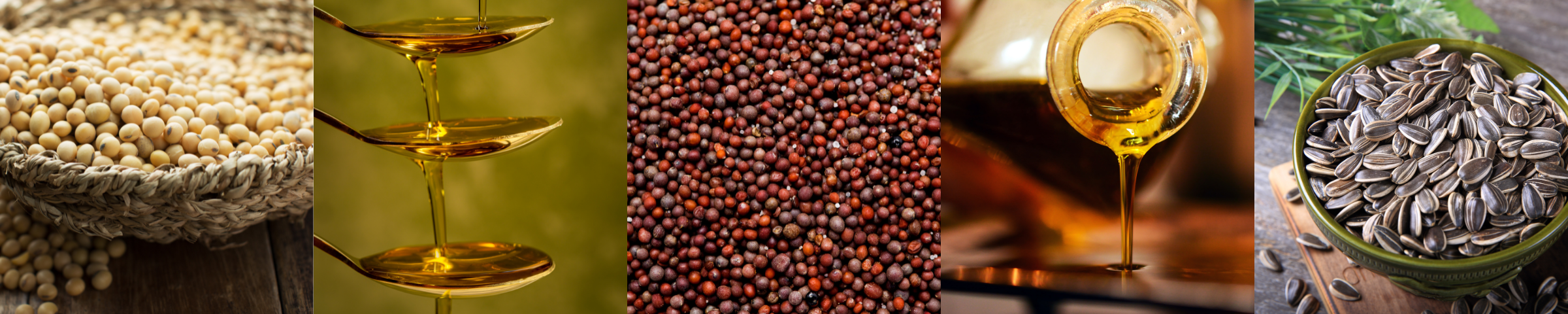
Why transparency & traceability matter here
Before we talk about molecules, let’s talk about context. Seed oils are used everywhere: cooking, industrial food production, dressings, frying, baked goods, you name it. When consumers attack “seed oils” they’re often attacking a package of issues at once: industrial processing, ultra-processed foods, monoculture agriculture, pesticide use, and a perception of “unnaturalness.” These are legitimate concerns, but lumping them all into a single villain (the bottle of canola oil) is a classic case of conflating ingredients with systems.
That’s where transparency helps:
Clear ingredient sourcing (who grew the soy? Was it non-GMO? how was it processed?) separates genuine risk from narrative.
Traceability gives brands the ability to show consumers how a product was made (farm → mill → bottle), which matters more—and sooner—than vague claims.
Traceability isn’t just consumer theater. It supports better research, regulatory compliance, and supply-chain resilience. Now let’s get into the hotly debated scientific piece: are seed oils inflammatory or harmful? Spoiler: the best clinical and epidemiologic evidence does not support that conclusion.
The claim: seed oils (omega-6 linoleic acid) drive inflammation — the facts
1) What seed oils mostly contain (the important bit)
Most common “seed oils” are rich in linoleic acid (LA), an omega-6 polyunsaturated fatty acid (n-6 PUFA). LA is an essential fatty acid: we need it and the body cannot synthesize it from scratch. It’s biochemically distinct from saturated fats and trans fats, and it behaves differently in metabolism and cell membranes.
2) The worry: LA → arachidonic acid → pro-inflammatory eicosanoids?
Mechanistically, LA can be metabolized (via elongation/desaturation) to arachidonic acid, which is a precursor to inflammatory signaling molecules. This pathway is real, and it’s the biological reason people hypothesize that high LA intake could ramp up inflammation.
3) The evidence: clinical trials & meta-analyses say no to “LA causes inflammation”
Multiple randomized controlled trials (RCTs) and systematic reviews have directly tested whether increasing dietary LA increases biomarkers of inflammation (C-reactive protein, interleukins, TNFα, etc.). The pooled results have consistently found no increase in systemic inflammatory markers when LA or seed-oil intake rises; in many cases, replacing saturated fat with n-6 PUFA improved cardiovascular risk markers. Recent reviews summarize this well: clinical trials show increased n-6 PUFA intake does not raise markers of inflammation or oxidative stress. (PMC)
A 2017 systematic review/meta-analysis of randomized trials specifically looked at dietary LA and blood inflammatory markers and found no evidence that higher LA increased inflammation. (EatrightPRO)
4) Prospective cohort and biomarker studies: higher LA often correlates with lower disease risk
Large observational analyses and biomarker studies show higher circulating or dietary LA is associated with lower risk of cardiovascular disease and some chronic conditions, not higher. A 2025 systematic review of prospective cohort studies reinforced that higher dietary and circulating levels of omega-6 fatty acids are linked to lower risks of CVD, cancers, and all-cause mortality in many analyses. (PMC)
5) Randomized feeding trials: replacing saturated fat with vegetable oils helps lipids and BP
Controlled feeding trials replacing saturated fat with vegetable oils (rich in LA) lowered atherogenic lipids and improved central blood pressure — outcomes that are directly relevant to heart disease risk. For example, a randomized controlled feeding trial found that replacing saturated fats with walnuts or vegetable oils improved central blood pressure and serum lipids in adults at risk for CVD. (PubMed)

So why the continuing controversy?
Two things keep the negative narrative alive.
A. Old trial reinterpretations and selective reading
Some historical trials (e.g., the Minnesota Coronary Experiment and the Sydney Diet Heart Study) have been reanalyzed to suggest that replacing saturated fat with omega-6 linoleic acid increased mortality in the trial populations. These reinterpretations generated headlines and legitimate scientific debate, but they are not dispositive. The trials had methodological limitations, different contexts (institutionalized populations, concurrent dietary differences), and their results have to be weighed against the larger body of RCTs and prospective studies showing benefits or neutral effects on hard outcomes. Systematic reviewers have cautioned against overinterpreting single trial reanalyses without context. (BMJ)
B. Conflation with ultra-processed foods and frying chemistry
People often see seed oils used in ultra-processed foods (UPFs) and deep-fried fast food, so they blame the oil rather than the food system:
Repeated high-temperature frying of any oil (or reuse of oil) can produce oxidation products and degraded molecules that are undesirable. That’s a process issue, not necessarily an indictment of the raw oil.
Ultra-processed food matrices (refined carbs + high sugar + additives) are independently associated with poorer health outcomes; separating oil effects from the overall product requires controlled studies — which many social posts do not do.
Nuance checklist: what the literature supports — and doesn’t
Supported by peer-reviewed evidence
Replacing dietary saturated fats with polyunsaturated fats (including LA from seed oils) lowers LDL cholesterol and improves some CVD risk markers. (PubMed)
Randomized trials and meta-analyses generally find no increase in systemic inflammatory biomarkers from higher LA intake. (EatrightPRO)
Higher circulating LA (biomarker) often correlates with lower risk of CVD and all-cause mortality in prospective studies. (PMC)
Not supported (or currently uncertain)
The simple slogan “seed oils cause inflammation and disease” is not supported by the balance of RCTs and cohort studies. (PMC)
Some older single trials raise questions that deserve scientific attention, but they don’t overturn the broader evidence base. (BMJ)
What this means for brands and traceability
If your brand cares about credibility (and it should), here’s how to act on both transparency and the seed-oil debate:
1. Separate ingredient integrity from processing practices
Trace and disclose cultivar, country/region, and pressing/refining method. Cold-pressed, expeller-pressed, or solvent-extracted oils are not identical in perception (or minor chemistry). Transparency reduces conspiratorial narratives.
Be explicit about frying practices: single-use oil, filtration, temperature control. Those operational details matter for product safety and consumer perception.
2. Use biomarkers and peer-reviewed science to inform claims
Avoid sweeping claims like “our oil reduces inflammation.” That’s both risky and scientifically shaky. Instead, highlight what you can document: fatty acid profile, sustainability credentials, and processing controls.
When you reference health, ground statements in peer-reviewed evidence (e.g., “Replacing saturated fats with polyunsaturated fats is associated with improved blood lipids.” Cite the trials/meta-analyses). (PubMed)
3. Tell the bigger story: system + ingredient
If a consumer balks at “seed oil” because they associate it with processed junk, show them the alternative: source choice, regenerative practices, fair contracts, and minimal processing. That’s the traceable story that wins trust.
Practical consumer guidance (what to say on labels and in marketing)
✅ “Contains linoleic acid (omega-6 PUFA). Clinical evidence shows PUFA can lower LDL when used to replace saturated fat.” (PubMed)
✅ “Produced from non-GMO soy/canola sourced from [region]; single-use frying with filtration to minimize oxidation.” (If true—trace it.)
❌ Avoid: “Seed oils prevent inflammation” or “Seed oils are toxic/villain” — neither claim is supported. (EatrightPRO)
Bottom line (in plain English)
Seed oils themselves are not the smoking gun that social posts make them out to be. High-quality clinical trials and meta-analyses show no increase in systemic inflammation from linoleic acid, and replacing saturated fat with polyunsaturated fats typically improves cardiovascular risk markers. (EatrightPRO)
The real problems are often how oils are used (overheating, repeated frying), what they’re combined with (ultra-processed food matrices), and how they’re produced at scale (monoculture, pesticides). Those are perfectly valid issues for transparency and traceability to attack.
Brands that invest in traceable, honest supply chains and communicate the nuance—showing both ingredient profile and processing practices—will be the ones that earn consumer trust and avoid getting dragged into viral misinformation battles.
Call to Action
Want to translate traceability into a trust-building product story that’s scientifically accurate and consumer-friendly? Culinary Culture helps brands design labeling, supply-chain storytelling, and evidence-based consumer claims that pass both the social-media smell test and the peer-review check. If you want, we’ll map your ingredient journey (farm → mill → finished product) and create the transparency assets your customers will actually read — and believe. Contact us to learn more.
Key peer-reviewed sources (the receipts)
Petersen KS, et al. Perspective on the health effects of unsaturated fatty acids and seed oils — clinical trials show increased n-6 PUFA does not increase markers of inflammation. (PMC review, 2024). (PMC)
Kim HK, et al. Recent insights into dietary ω-6 fatty acid health (narrative/systematic review). (PMC, 2022). (PMC)
Su H, Liu R, Chang M, Huang J, Wang X. Dietary linoleic acid intake and blood inflammatory markers: systematic review & meta-analysis of RCTs. Food & Function, 2017. (EatrightPRO)
Tindall AM, et al. Replacing saturated fat with walnuts or vegetable oils improves central blood pressure and serum lipids in adults at risk for CVD: randomized controlled-feeding trial. J Am Heart Assoc, 2019. (PubMed)
Ramsden CE, et al. Re-evaluation of the traditional diet–heart hypothesis (systematic review/meta-analysis and critical reappraisal of old trials). BMJ, 2016 — useful context on why single historical trial reanalyses must be weighed carefully. (BMJ)
Sadeghi R, et al. Dietary and circulating omega-6 fatty acids and their impact — 2025 review linking higher omega-6 with lower CVD and mortality risks. (PMC)