
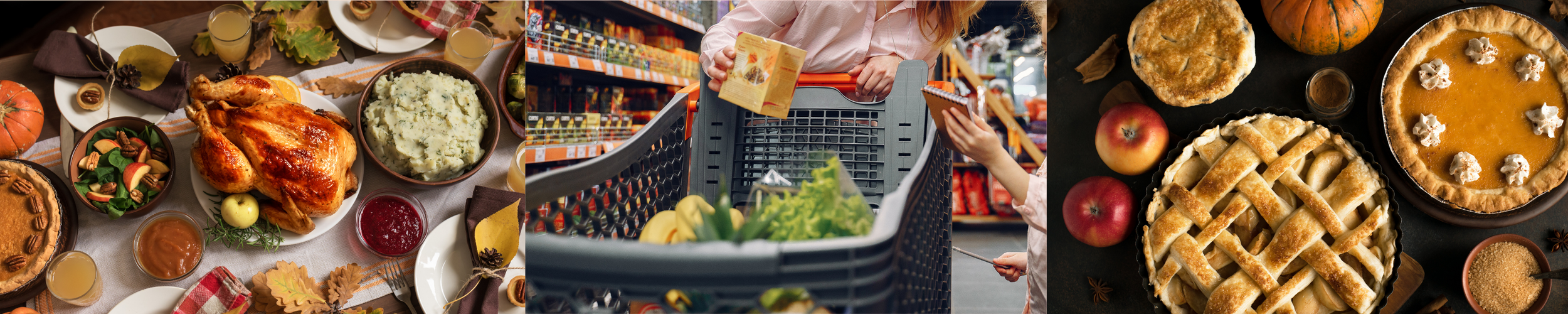
Every November, the American Farm Bureau Federation publishes a number that the entire food and beverage industry quietly watches: the cost of a classic Thanksgiving dinner for ten. It's a simple, almost old-fashioned metric — turkey, stuffing, cranberries, a couple of pies, some vegetables — but it has become one of the most-cited proxies for food inflation in the country, and it lands at the exact moment consumers are deciding how big, how traditional, and how indulgent their holiday table is going to be.
We wrote in June about the “shrink, swap, or innovate” framework shaping how brands respond to margin pressure across the broader market. Thanksgiving is that framework under a microscope, compressed into a single meal occasion that happens once a year, in front of extended family, with zero tolerance for anything that reads as a compromise.
The Numbers Behind the Table
The Farm Bureau's survey has tracked meaningful swings in the cost of a classic Thanksgiving dinner over the past several years, driven heavily by turkey and commodity pricing, with the total cost for ten typically landing somewhere in the high-$50s to mid-$60s range depending on the year's input costs. The specific number moves with egg, dairy, and poultry markets each season — but the trend that matters more than any single year's figure is the volatility itself. Thanksgiving dinner has gone from a predictable, stable cost basket to one that swings double digits year over year, and consumers have noticed.
“Thanksgiving has become a referendum on food inflation. It's one meal, once a year, that almost every American household prepares roughly the same way — which makes it one of the cleanest windows we have into how people are actually feeling about grocery prices.” — Food Institute, holiday spending commentary
That sensitivity shapes behavior well beyond the grocery list. Retailers increasingly use Thanksgiving staples as loss-leader price anchors — frozen turkey price freezes and bundled “complete dinner” promotions are now a standard part of the November playbook for most major grocers, designed explicitly to control the headline number consumers fixate on, even when margins are protected elsewhere in the basket.
The Bifurcation Shows Up Hardest at the Holiday Table
Our June blog covered the broader “value equation” bifurcation in food spending: consumers trading down on everyday categories while still splurging on items that feel worth it. Thanksgiving is where that bifurcation becomes most visible, because the holiday table contains both kinds of purchases in the same basket.
Where shoppers trade down. Store-brand canned goods, boxed stuffing mixes, and basic baking staples see real private-label substitution at Thanksgiving. The quality bar for a canned cranberry sauce or a box of stuffing mix is low enough that brand loyalty is weak, and price sensitivity on these commodity-adjacent items is high.
Where shoppers trade up. The centerpiece items tell a different story. Specialty and heritage-breed turkeys, bakery-fresh pies instead of frozen, and premium butter and cream for sides all see demand hold or grow even in a cost-conscious year, because these are the items a host feels judged on. Nobody serves a store-brand pie to their in-laws if they can help it.
This isn't inconsistency. It's the same consumer making deliberate trade-offs within a single shopping trip, protecting the parts of the meal that carry social and emotional weight while cutting cost everywhere else. Brands and retailers that understand which category their product falls into — commodity substitute or centerpiece splurge — can price and position accordingly instead of guessing.
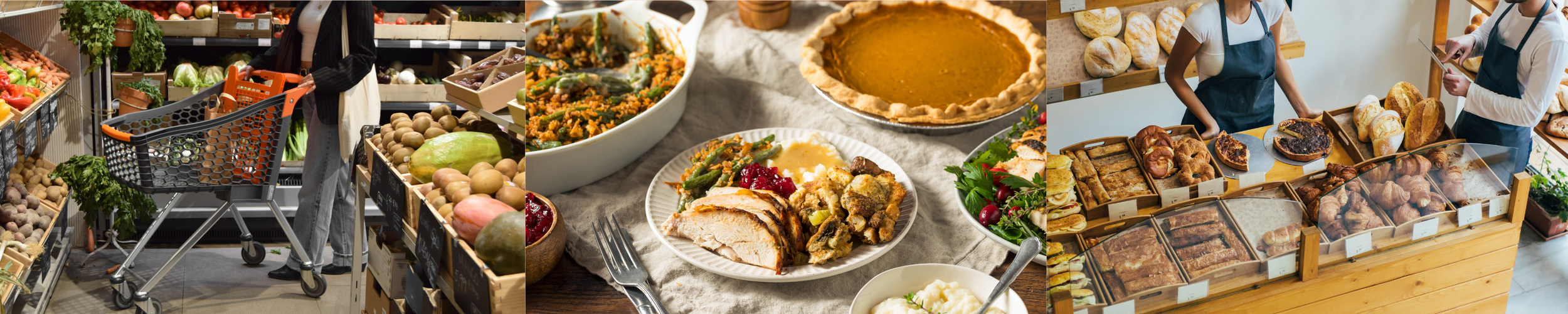
What Premiumization Actually Looks Like This Season
The brands winning in this environment aren't ignoring cost pressure; they're reframing what the premium price is buying. A heritage turkey brand that leads with flavor, provenance, and a smaller, more manageable bird size for shrinking average household gatherings is answering a real need, not just charging more for the same product. Bakeries and CPG dessert brands leaning into “made with real butter” and simplified ingredient decks are doing the same thing June's blog described in the broader market: premiumization that's rooted in a genuine, communicable improvement rather than a label change.
Foodservice sees a parallel version of this story. Restaurants offering Thanksgiving-to-go packages and holiday catering are increasingly positioning the convenience itself as the premium — not just the food, but the hours of prep time a host doesn't have to spend. That's a value proposition that holds up even in a cost-conscious year, because it's solving a real problem (time and labor at home) rather than competing purely on taste or tradition.
The Risk of Getting the Trade-Off Wrong
Thanksgiving leaves almost no room for a premiumization misstep. A consumer will forgive a slightly smaller bag of chips or a reformulated snack without much notice. They will not forgive a holiday centerpiece that reads as cheaper than it used to be. The cost of misjudging which items shoppers consider sacred is higher at this single meal occasion than almost anywhere else on the retail calendar.
That asymmetry is worth internalizing for anyone making pricing or formulation decisions ahead of the holiday season. A quiet downgrade on a centerpiece item — a smaller turkey at the same price, a pie crust that swaps real butter for shortening — carries reputational risk disproportionate to the margin it protects, precisely because the holiday meal is a high-visibility, high-emotion occasion where consumers are paying closer attention than they do in a normal grocery trip.
What This Means for Brands and Operators Heading Into the Season
The practical takeaway is to treat the holiday basket as two distinct categories requiring two distinct strategies. Commodity-adjacent items can compete on price and private-label parity without much brand risk. Centerpiece items need genuine, well-communicated value — real ingredient quality, thoughtful portioning for smaller modern gatherings, or meaningful convenience — because that's where consumers are actively evaluating whether the price is earning its place on the table.
Getting this distinction right is as much a research question as a pricing one: understanding exactly which SKUs in a holiday lineup carry emotional weight for the shopper, and which are functionally interchangeable, is the kind of consumer insight work that should inform the pricing conversation well before the November shelf set is finalized.
Conclusion
The Farm Bureau's number gets the headlines, but the more useful story is underneath it: Thanksgiving has become a compressed, high-stakes test of whether a brand understands its own value proposition. Shoppers aren't cutting back uniformly, and they aren't splurging uniformly. They're making sharp, specific distinctions about what's worth paying for — and the brands that read those distinctions correctly are the ones that will own the holiday table next year, too.
Ready to Find Your Centerpiece Strategy?
Whether you're pricing a holiday lineup, developing a premium seasonal product, or trying to understand which items in your portfolio your customers consider sacred, Culinary Culture brings the consumer insight and culinary development expertise to help you make that call with confidence. Let's talk about your holiday strategy. Reach out to the Culinary Culture team today.